
Quick Answer
Most companies treat meetings as disposable: a call ends, people scatter, and the decisions made in that room exist only in the memory of whoever was present. When those people leave, the reasoning behind your roadmap, the vendor you rejected and why, the strategy you pivoted from, all of it vanishes. AI meeting notes fix this by converting your meetings into a searchable, permanent record of decisions, context, and reasoning. The result is a company that can learn from its own history.
Key Takeaways
- Most organizational knowledge lives in meetings, not in documents, and it disappears when employees leave
- The average cost of replacing an employee exceeds 50% of their annual salary when knowledge transfer loss is factored in
- New hires spend weeks reconstructing context that is already documented in meeting recordings, they just cannot access it
- AI meeting notes create a searchable decision log: "Why did we choose vendor X?" becomes a query, not a mystery
- Executives can review 20 meetings in 5 minutes using AI summaries, enabling faster strategic alignment
- Topic-level search across meetings shows every time a subject was discussed, giving teams a full decision history, not just the most recent one
- KenzNote's chat interface lets anyone ask natural language questions about meeting content without reviewing hours of recordings
Table of Contents
- The Organizational Memory Problem
- Why Meetings Are Where Knowledge Disappears
- What Happens When Institutional Knowledge Walks Out
- How AI Meeting Notes Change This
- Four Concrete Use Cases for Organizational Memory
- Building a Meeting Knowledge Base: What It Requires
- Common Objections and the Honest Answers
- How KenzNote Supports Organizational Memory
- Frequently Asked Questions
- Related Resources
The Organizational Memory Problem
Every organization accumulates knowledge through experience. The vendor that failed to deliver. The market segment you tried and abandoned. The feature you built and removed because users did not actually want it. The partnership that seemed promising until legal raised concerns.
This knowledge is valuable. It prevents you from repeating the same mistakes, shortens the time it takes to onboard new people, and gives you the context to understand why current decisions were made.
The problem: almost none of it is written down in a retrievable form.
It lives in the heads of the people who were present. It gets passed through verbal conversation. It gets embedded in institutional habits nobody can explain. And then a key employee resigns, or a team is restructured, and a significant portion of that accumulated intelligence evaporates.
According to Gallup, voluntary employee turnover costs US businesses approximately $1 trillion per year. That figure includes recruiting and training costs, but it substantially underestimates the less visible cost: lost knowledge. The new hire filling a departed employee's role may be equally talented, but they start from zero on context that took years to build.
This is the organizational memory problem, and it is structural, not personal. Individual employees are not failing to document what they know. The problem is that organizations have never built reliable mechanisms for capturing knowledge as it is created, in real time, during the actual moments when decisions are made.
Those moments are meetings.
Why Meetings Are Where Knowledge Disappears
Think about where your organization actually makes decisions. Not where decisions are announced, but where they are made, where alternatives are considered, where trade-offs are debated, and where context is shared.
It happens in meetings.
The strategic planning session where you chose to enter a new market. The engineering review where you decided to rebuild the authentication layer. The client call where you agreed to a scope change. The quarterly review where you identified the metric that was misleading everyone.
These are not trivial events. They represent your organization's accumulated reasoning. And in most companies, the documentation of these moments is a brief calendar invite summary, a hastily typed Slack message, and the increasingly unreliable memories of whoever was present.
McKinsey research found that knowledge workers spend an estimated 19% of their week searching for and gathering information, and that a significant share of that search is for information that already exists somewhere in the organization but cannot be found. The search problem is downstream of the capture problem: you cannot find what was never properly recorded.
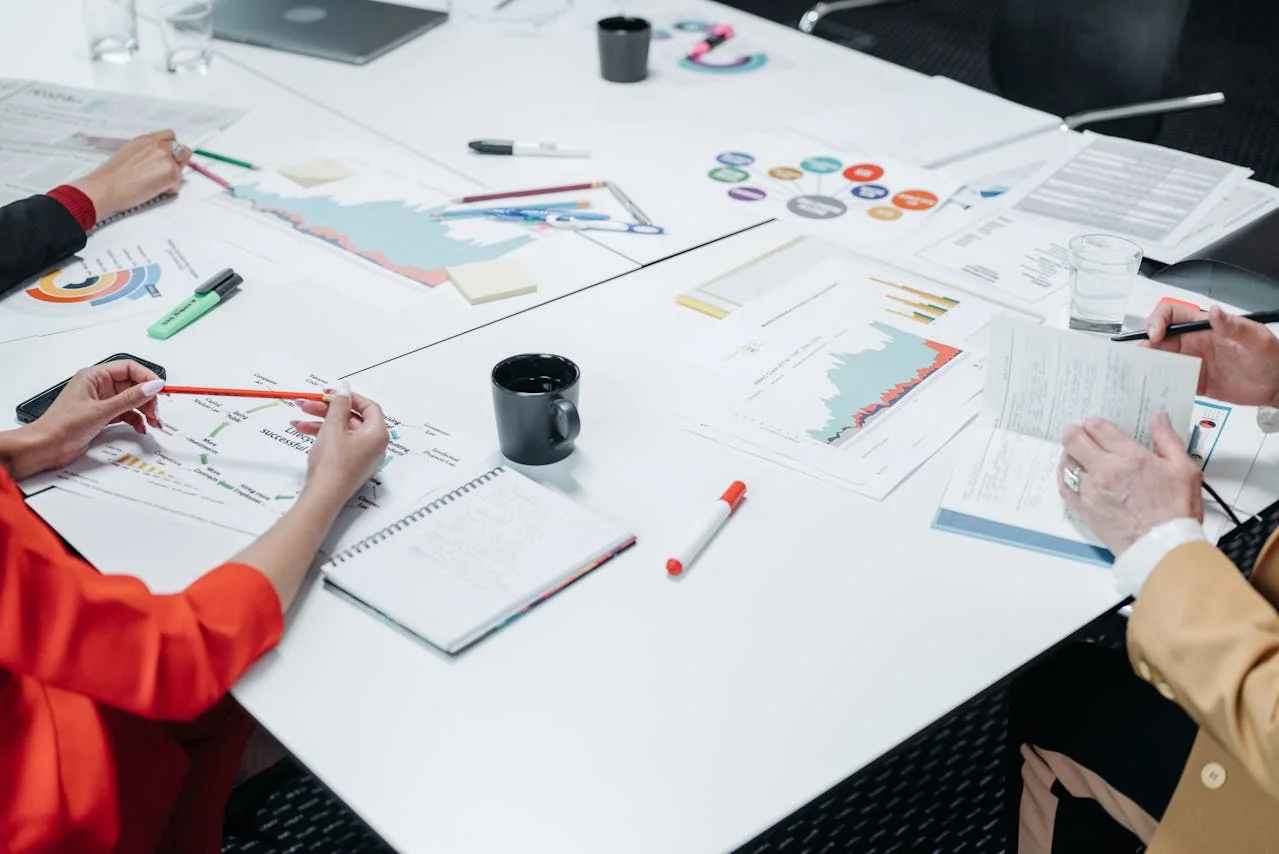 The decisions that shape your organization are made in meetings. Most of that context is never captured in a searchable form.
Traditional meeting documentation does not solve this. Manual notes are selective, reflect the note-taker's interpretation, and are typically filed in a folder nobody revisits. Action items get captured; reasoning does not. Decisions get recorded; alternatives considered and rejected do not.
AI transcription changes this by capturing everything, not the note-taker's filtered interpretation of the meeting, but the full conversation, accurately transcribed, with speaker identification, timestamps, and AI-generated summaries that surface the key points without requiring someone to read 40 pages of transcript.
For a broader treatment of what AI meeting assistants do and how they work, see What Is an AI Meeting Assistant?.
What Happens When Institutional Knowledge Walks Out
Consider a practical scenario. Your head of product has been with the company for four years. She is the institutional memory for why your pricing model is structured the way it is, why you deprecated a feature the sales team keeps asking about, and why you chose your current data infrastructure over the three alternatives you evaluated.
She resigns.
Her replacement is excellent. But on day one, he does not know any of this. He will ask the same questions in the next six months that were already answered in meetings over the past four years. He will consider the same alternatives that were already evaluated and rejected. He will make some decisions that were already made before, with less information than the original decision-makers had.
This pattern repeats across every team when people leave. The researchers at Harvard Business Review have documented that organizations consistently underestimate how much tacit knowledge exists only in people's heads, and how long it takes new employees to reconstruct working context: typically six to twelve months for complex roles.
The solution is not asking people to write documentation before they leave. That documentation is incomplete, retrospective, and often inaccurate because memory is selective. The solution is capturing knowledge at the moment of creation, when the decision is being made and the reasoning is being articulated.
How AI Meeting Notes Change This
AI meeting transcription converts meetings from ephemeral events into permanent, searchable records. The mechanism is straightforward:
- Every meeting is recorded and transcribed automatically
- AI generates a summary highlighting decisions, action items, and key points
- The full transcript and summary are stored and indexed
- Any team member can search across all past meetings for specific topics, names, or decisions
The result is a knowledge base that builds itself. Every meeting adds to an accumulating record of organizational reasoning. New hires can search it. Executives can query it. Anyone trying to understand why a decision was made can find the meeting where it was discussed.
This is not a new category of software. It is a new use of existing technology, but the implication for organizational knowledge is significant. For the first time, the reasoning behind decisions does not depend on the memory of the people who were present.
See AI Meeting Notes: Complete Guide for a full breakdown of how modern AI meeting tools process and structure meeting content.
 AI-generated meeting notes and summaries accumulate over time into a searchable record of your organization's decisions and reasoning.
Four Concrete Use Cases for Organizational Memory
1. New Hire Onboarding
The standard onboarding process involves a new hire sitting through meetings, reading existing documentation, and asking colleagues to explain context. This takes weeks and interrupts the people being asked.
With an AI meeting knowledge base, a new hire can search for any topic relevant to their role and find every meeting where it was discussed. They can understand not just the current state but the history: what was tried before, what alternatives were considered, what changed and when.
A product manager joining a team can review the last six months of product planning meetings in two to three hours, arriving at their first planning session with actual context rather than a blank slate.
2. Executive Review and Strategic Alignment
Senior leaders are often the bottleneck in strategic alignment because they are the ones expected to hold the most context about the organization's direction. In practice, they are also the ones most likely to be in back-to-back meetings with no time to review what happened in the 12 meetings they could not attend.
AI summaries compress this dramatically. An executive can review summaries of 20 team meetings in under 30 minutes, identifying alignment gaps, repeated issues, and decisions that require their input, without sitting through hours of recordings or relying on filtered updates from direct reports.
3. Decision Archaeology
"Why did we build it this way?" "When did we decide to stop supporting that feature?" "What was the reason we moved away from that vendor?"
These questions come up constantly in product, engineering, and operations work. Without recorded meetings, the answers depend on institutional memory that may not exist in the organization anymore.
With AI-indexed meeting transcripts, these questions become searches. You can find the exact meeting, the exact conversation, and the exact reasoning. Decision archaeology takes minutes instead of being impossible.
4. Topic Continuity Across Team Changes
Projects often span months or years and involve multiple team members rotating through. When team composition changes, context gaps appear. The new engineer does not know what the previous architect decided about the database schema. The new account manager does not know what was promised in the discovery call eight months ago.
AI meeting notes that are searchable by topic close these gaps. Any team member can pull up every meeting where a subject was discussed, regardless of who was present at the time.
Building a Meeting Knowledge Base: What It Requires
An organizational memory system built on meeting notes requires a few components:
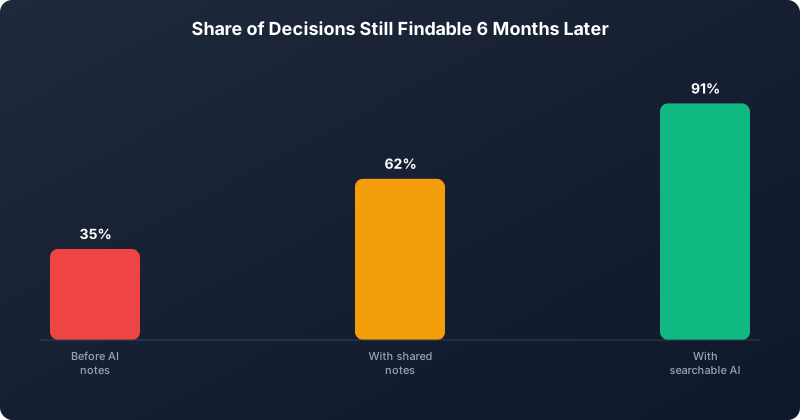 Searchable AI notes dramatically increase how much of a decision survives past the meeting itself.
Consistent capture. If only some meetings are transcribed, the knowledge base has gaps. The best practice is to establish a default: all meetings of a certain type are recorded and processed. This works better than relying on individuals to remember to activate recording.
Search capability. A folder of transcript files is not a knowledge base. You need full-text search across all transcripts, ideally with AI-powered query capability so you can ask questions in natural language rather than searching for exact keyword matches.
Structured summaries. Full transcripts are long. For most organizational memory use cases, the AI-generated summary is the primary access point. Well-structured summaries with clear sections for decisions, action items, and key discussion points make the knowledge base far more usable.
Retention policy. Not all meetings should be retained indefinitely. A sensible policy distinguishes between strategic and governance meetings (longer retention) and operational check-ins (shorter retention). See the GDPR and data retention considerations in any compliance-sensitive organization.
Access controls. Not all meeting content should be accessible to all employees. HR meetings, executive strategy sessions, and client-specific discussions should be accessible to appropriate roles, not the entire company.
KenzNote's approach to meeting notes, including the full structure of outputs it generates, is detailed in Automatic Meeting Notes: How It Works.
Common Objections and the Honest Answers
"People will be less candid if they know meetings are recorded."
This concern is real and should be taken seriously. The response is twofold: first, establish a clear policy about which meeting types are recorded and which are not, so employees have predictable expectations. Second, the benefit of organizational memory needs to outweigh the cost of reduced candor, and for most team meetings focused on operational decisions, this trade-off is favorable. Sensitive HR and personal conversations should not be in the recorded category.
"We already have a wiki and Confluence."
Documentation tools capture what people choose to write down, after the fact, filtered through memory and selective emphasis. Meeting transcripts capture what was actually said during the decision. These are complementary, not substitutes. The wiki captures finalized decisions; meeting notes capture the reasoning.
"This creates a legal liability because everything is discoverable."
This is a legitimate concern for some organizations, particularly those in regulated industries or frequent litigation. However, the alternative is not zero documentation, it is undocumented decisions that cannot be explained or defended. Consult legal counsel on your specific situation, but for most organizations, documented reasoning is an asset in disputes, not a liability.
"Nobody will actually use the knowledge base."
The usability of the knowledge base depends on how accessible it is. A system that requires users to browse folders of long transcripts will not be used. A system with AI chat that lets anyone ask "what did we decide about the pricing model in Q3?" will be used because it is easier than asking a colleague.
How KenzNote Supports Organizational Memory
KenzNote's design supports the organizational memory use case in several ways:
Chat interface for meeting content. Rather than searching through transcripts, you can ask KenzNote natural language questions about meeting content. "What were the action items from the March product review?" "What did we decide about the contractor proposal?" The AI retrieves relevant content from the transcript and summarizes it directly.
Structured output. Every processed meeting produces a summary with labeled sections: key decisions, action items, important discussion points. This makes scanning faster than reviewing raw transcripts.
No bot required. Because KenzNote uses an upload-based workflow, you can retroactively process recordings from past meetings, not just future ones. If you have a library of recorded meetings already, you can begin building your knowledge base from them.
Privacy-first architecture. Organizational knowledge is sensitive. KenzNote contractually commits to never training AI on your meeting data, meaning your strategic discussions, client conversations, and internal decisions are not feeding a model that could surface that information elsewhere.
For a walkthrough of getting KenzNote set up for your team, see Getting Started with KenzNote. For broader context on meeting productivity, see Meeting Productivity Statistics 2026.
Frequently Asked Questions
How far back can I go when building a meeting knowledge base?
If you have recordings from past meetings, you can process them through KenzNote to build a retroactive knowledge base. The upload-based workflow means there is no limit on processing historical recordings. The practical constraint is having recordings available in the first place: if meetings were not recorded before you introduced this workflow, there is nothing to retroactively process.
How do I handle sensitive meetings like HR discussions or executive strategy?
Establish a clear policy distinguishing which meeting categories are captured and who can access them. For HR meetings, the better approach is typically not to include them in the shared knowledge base at all. For executive strategy meetings, restrict access to appropriate roles. The presence of an organizational memory system does not mean all organizational memory must be universally accessible.
Does this work with async meetings or recorded presentations?
Yes. KenzNote processes any audio or video recording, not just live meetings. Recorded presentations, async video updates, and even client webinars can be uploaded and processed into the same knowledge base structure.
What is the difference between this and a traditional wiki?
A wiki captures what someone chose to write after the fact. Meeting transcripts capture what was actually said during the decision. They serve different purposes: wikis are better for synthesized, finalized documentation; meeting notes are better for capturing context, alternatives considered, and the reasoning behind decisions. Both have a place, and they complement each other.
How do new team members get access to the meeting knowledge base?
This depends on your organization's access control policies and where you store processed meeting content. KenzNote processes meetings and returns structured output; how that output is organized and shared within your organization is up to you. A common approach is to save processed meeting summaries and transcripts to a shared folder or documentation system with appropriate access controls.
What search capabilities does KenzNote offer across meetings?
KenzNote's chat interface lets you ask natural language questions about the content of processed meetings. You can query by topic, by decision type, or by specific phrases. This is more flexible than keyword search and more practical for the organizational memory use case, where you often want to ask "what did we discuss about X" rather than search for an exact string.
Related Resources
References & Citations
- [1]How to Get a New Employee Up to SpeedHarvard Business Review. May 1, 2015https://hbr.org/2015/05/how-to-get-a-new-employee-up-to-speed
- [2]This Fixable Problem Costs U.S. Businesses $1 TrillionGallup. March 13, 2019https://www.gallup.com/workplace/247391/fixable-problem-costs-businesses-trillion.aspx
All external sources have been reviewed for accuracy and relevance. Last verified: October 2026.

About KenzNote Team
The KenzNote team is dedicated to helping teams capture better meeting insights and transform how they collaborate. With backgrounds in AI, product design, and enterprise software, we're building the future of meeting productivity.
Ready to transform your meetings?
KenzNote automatically captures meeting insights, extracts action items, and generates summaries so you can focus on the conversation instead of taking notes.
Try KenzNote Free