
AI Note Taker for Therapists: Best HIPAA-Compliant Tools 2026
Quick Answer
The best HIPAA-compliant AI note takers for therapists in 2026 include KenzNote, Upheal, Noteable, Blueprint AI, and Mentalyc, each offering BAA agreements and privacy-first design suited to mental health practice.
For therapists who prioritize client confidentiality above all else, KenzNote offers a privacy-forward, upload-based approach at $0.99 per session: no bot joins the session, no calendar access required, and audio never touches a third-party platform during the live conversation.
Disclaimer: This article is for informational purposes only. Technology compliance is not static. HIPAA requirements, vendor BAA terms, and product features change. Every clinician is responsible for independently verifying whether any tool meets their specific compliance obligations before using it with clients. Consult your legal counsel, malpractice insurance carrier, or a healthcare compliance professional if you are uncertain.
Key Takeaways
- Documentation burden is real: Mental health clinicians spend 1.5 to 2 hours on documentation for every 3 hours of direct client care
- BAA is non-negotiable: Any AI tool that processes therapy session content must have a signed Business Associate Agreement before you use it with clients
- Upload-based tools are safest: Tools like KenzNote that process recordings after the session never expose live sessions to third-party servers
- Client consent is required: Recording and AI-processing therapy sessions requires explicit informed consent regardless of which tool you use
- AI assists, not replaces: AI-generated notes are drafts. Every note in a client's record is the licensed clinician's legal responsibility
- $0.99 per session: KenzNote lets therapists pay only for sessions they choose to document with AI, with no monthly commitment
- Purpose-built tools go deeper: Upheal and Mentalyc generate SOAP/DAP-structured output; KenzNote produces transcripts and summaries that serve as raw material for structured notes
Table of Contents
- The Documentation Burden Therapists Carry
- HIPAA Requirements for AI Note-Taking Tools
- What to Look for in an AI Note Taker for Therapists
- Which Tool Is Right for Your Practice?
- Top HIPAA-Compliant AI Note Takers for Therapists
- Comparison Table
- How Therapists Are Using AI Note Tools
- An Important Warning: AI Should Assist, Not Replace Clinical Documentation
- Frequently Asked Questions
- Related Resources
You just finished your last session of the day. Seven more to go tomorrow. Somewhere between now and when you can leave the office, you have to write seven SOAP notes, update two treatment plans, and respond to an insurance prior authorization request.
This is the part of therapy no client ever sees.
AI note-taking tools have become one of the most practical solutions to documentation overload in mental health practice. But therapy sessions are not ordinary meetings. The stakes for privacy, accuracy, and ethical practice are fundamentally higher. Choosing the wrong tool, or using the right tool incorrectly, carries real professional and legal risk.
This guide breaks down exactly what HIPAA requires, what to look for in a compliant AI tool, and the best options available for therapists in 2026.
The Documentation Burden Therapists Carry
A therapist seeing 50 clients per week is not just delivering 50 hours of clinical care. They are producing 50 sets of session notes (typically SOAP or DAP format), updating treatment plans, completing intake paperwork, writing insurance prior authorizations, and maintaining crisis documentation. By most estimates, mental health clinicians spend 1.5 to 2 hours on documentation for every 3 hours of direct client care.
Fact Box: Therapist Documentation Statistics
- 10-15 hours per week: Time full-time therapists spend on documentation and administrative tasks
- $50,000+ annually: Estimated revenue lost by solo practitioners due to unpaid documentation time
- 71% of therapists report documentation as their primary source of occupational burnout (APA Workforce Survey)
- 40% reduction in documentation time reported by clinicians using AI note-assist tools
- Insurance audits rising: Payer requests for clinical documentation increased 34% between 2022 and 2025
Sources: American Psychological Association Workforce Survey, Mental Health Technology Review 2025
That ratio compounds. For a full-time therapist carrying a standard caseload, it translates to 10-15 hours per week spent on administrative tasks that generate no revenue and create no therapeutic value. After a long day of emotionally demanding sessions, sitting down to write notes is how burnout starts.
The pressure only intensifies with insurance requirements. Payers increasingly require detailed clinical notes that demonstrate medical necessity, align with treatment goals, and use specific diagnostic coding language. Notes that were once sufficient (a paragraph describing the session and plan) may no longer satisfy auditors. This documentation inflation has reached a point where many therapists cite paperwork, not caseload size, as their primary source of occupational stress.
AI note-taking tools emerged directly in response to this problem. They promise to handle the transcription and first-draft documentation work, freeing clinicians to focus on the clinical work itself. The promise is real, but in mental health practice, the implementation demands a higher standard of scrutiny than in most other professions.
HIPAA Requirements for AI Note-Taking Tools
Therapy sessions are among the most sensitive conversations a person can have. Clients disclose trauma, substance use history, relationship difficulties, suicidal ideation, and deeply personal information they may not share with anyone else. HIPAA (the Health Insurance Portability and Accountability Act) recognizes this sensitivity and imposes strict requirements on any technology that handles Protected Health Information (PHI).
Before using any AI note-taking tool with client sessions, therapists must understand what HIPAA actually requires.
The Business Associate Agreement (BAA)
This is the non-negotiable starting point. Any vendor who handles PHI on your behalf, including storing, processing, or transmitting therapy session recordings or transcripts, is a "Business Associate" under HIPAA. You must have a signed Business Associate Agreement (BAA) with that vendor before any PHI is shared.
A BAA is a formal legal contract in which the vendor commits to:
- Protecting PHI to HIPAA standards
- Using PHI only for the purposes specified in the agreement
- Reporting breaches to you within specified timeframes
- Returning or destroying PHI at the end of the relationship
- Making their security practices available for audit
If a vendor will not sign a BAA, you cannot legally use their service with client PHI, full stop. This eliminates most general-purpose AI tools (ChatGPT, standard Otter.ai, Google Meet's transcription, etc.) from clinical use without first confirming BAA availability and signing one.
Encryption at Rest and in Transit
HIPAA requires that PHI stored or transmitted electronically be protected through encryption or equivalent security controls. For AI note-taking tools, this means:
- In transit: Audio uploads and data transfers must use TLS (Transport Layer Security) encryption
- At rest: Stored transcripts, recordings, and notes must be encrypted in the vendor's storage systems
Access Controls and Audit Logs
Vendors must implement controls that ensure only authorized individuals can access PHI, and must maintain logs of who accessed what and when. In a clinical context, this matters if your practice is ever subject to a HIPAA audit or legal discovery request.
Data Residency and Subcontractors
Where is your client data stored, and who else might touch it? Reputable healthcare AI vendors document their data center locations (typically US-based for HIPAA compliance) and disclose whether they use subcontractors, and whether those subcontractors are also covered by the BAA chain.
What Is Not Required (But Is Still Good Practice)
HIPAA does not mandate any specific technology or product. It sets a standard of "reasonable and appropriate" security. This means a therapist using a HIPAA-compliant AI tool could still face a breach if other practices (like leaving a client login unsecured) were inadequate. Compliance is the whole system, not just the tool.
What to Look for in an AI Note Taker for Therapists
Beyond HIPAA fundamentals, therapists evaluating AI note-taking tools should assess these specific criteria:
HIPAA compliance with signed BAA available. Confirm the vendor offers a BAA and that you have signed it before processing any client session. Do not assume compliance; verify it in writing.
No bot joining live sessions. A recording bot that appears in your video session as a visible participant creates immediate clinical problems. It changes the therapeutic environment, may startle or distress clients, and raises consent complications. Upload-based tools that process audio after the session avoid this entirely.
No third-party data sharing for AI training. Some AI services use customer data to train or improve their models. For therapy sessions, this is unacceptable. Your vendor's data processing agreement should explicitly prohibit using client session content for model training.
Accuracy with clinical terminology. Does the transcription engine handle terms like "cognitive distortions," "dissociative episodes," "EMDR," "DBT skills," and DSM-5 diagnostic language accurately? Clinical accuracy matters for documentation that may become part of a legal or insurance record.
Output formats aligned with clinical documentation. Therapists need SOAP notes, DAP notes, progress notes, and treatment plan updates, not generic meeting summaries. Specialized mental health AI tools are designed around these formats.
Client consent workflow. Using AI to record and transcribe therapy sessions requires informed consent from clients. Look for tools that provide consent documentation templates or guidance. This is an ethical and legal obligation regardless of what the technology allows.
Minimal data footprint. The less data a tool collects (no calendar integration, no persistent account linking to client identities, upload-only models) the smaller the potential exposure if the vendor experiences a breach.
Which Tool Is Right for Your Practice?
Use this guide to choose the right AI note tool for your clinical context.
START: What best describes your practice?
│
├─ SOLO PRIVATE PRACTICE
│  │
│  └─ How many clients per week?
│     │
│     ├─ UNDER 20 SESSIONS/WEEK
│     │  │
│     │  └─ Do you want to record every session or selectively?
│     │     │
│     │     ├─ SELECTIVELY → KenzNote ($0.99/session, upload-based)
│     │     │               ✅ No monthly commitment
│     │     │               ✅ No bot in session
│     │     │               ✅ Pay only when you need it
│     │     │
│     │     └─ EVERY SESSION → Mentalyc (~$29-39/mo)
│     │                       ✅ Purpose-built for solo therapists
│     │                       ✅ SOAP/DAP/PIRP output
│     │
│     └─ 20+ SESSIONS/WEEK
│        │
│        └─ Upheal (~$69/mo) or Mentalyc (~$29-39/mo)
│           ✅ Volume justifies monthly subscription
│           ✅ Purpose-built clinical note formats
│
├─ GROUP PRACTICE
│  │
│  └─ Do you need EHR integration?
│     │
│     ├─ YES → Noteable (SimplePractice, TherapyNotes integration)
│     │       ✅ Notes flow directly into clinical record
│     │
│     └─ NO → Blueprint AI or Upheal (practice plans available)
│             ✅ Full treatment lifecycle documentation
│
├─ PREFER NOT TO RECORD SESSIONS
│  │
│  └─ AutoNotes (~$17/mo)
│     ✅ Works from clinician voice memos or typed descriptions
│     ✅ No session recording required
│
└─ MAXIMUM PRIVACY CONTROL
   │
   └─ KenzNote ($0.99/session, upload-based)
      ✅ No bot in session
      ✅ No calendar access
      ✅ Upload only recordings you choose
Top HIPAA-Compliant AI Note Takers for Therapists in 2026
1. KenzNote - Best for Privacy-First Practices
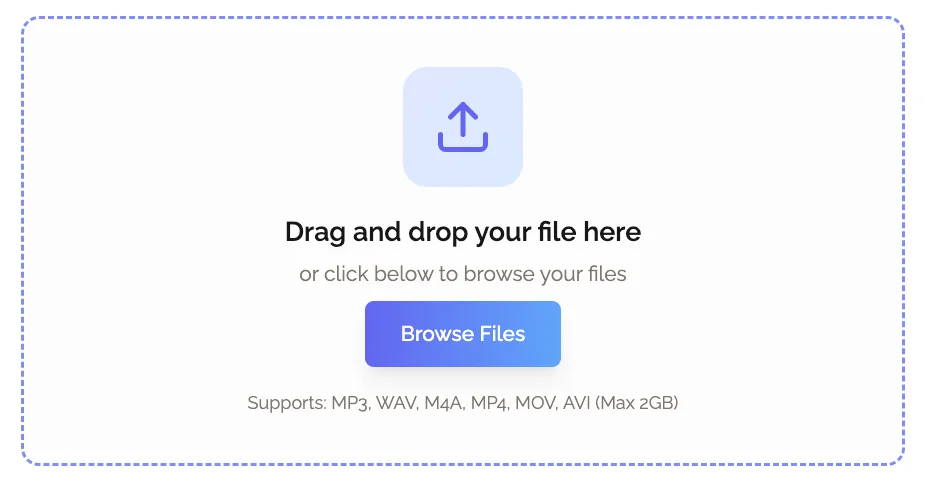
KenzNote takes a fundamentally different approach from purpose-built therapy AI tools: it is an upload-based AI meeting notes tool with no bot that joins sessions. You record the therapy session locally (using your device, a dictation recorder, or your telehealth platform's native recording), then upload the audio to KenzNote after the session ends.
Why it works for therapy: The upload-only model means the AI never has access to a live session. There is no bot visible in a telehealth call, no third-party application connected to your calendar, and no automated access to sessions you did not explicitly choose to upload. You control exactly which sessions are processed and when.
Pricing: $0.99 per session. No monthly subscription. No minimum commitment. Therapists who record selectively (perhaps only sessions requiring detailed insurance documentation) pay only for what they actually use.
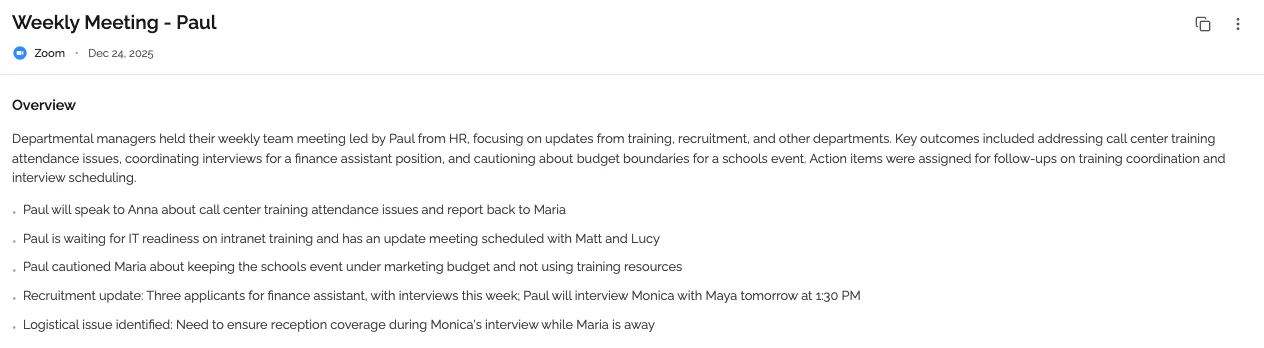
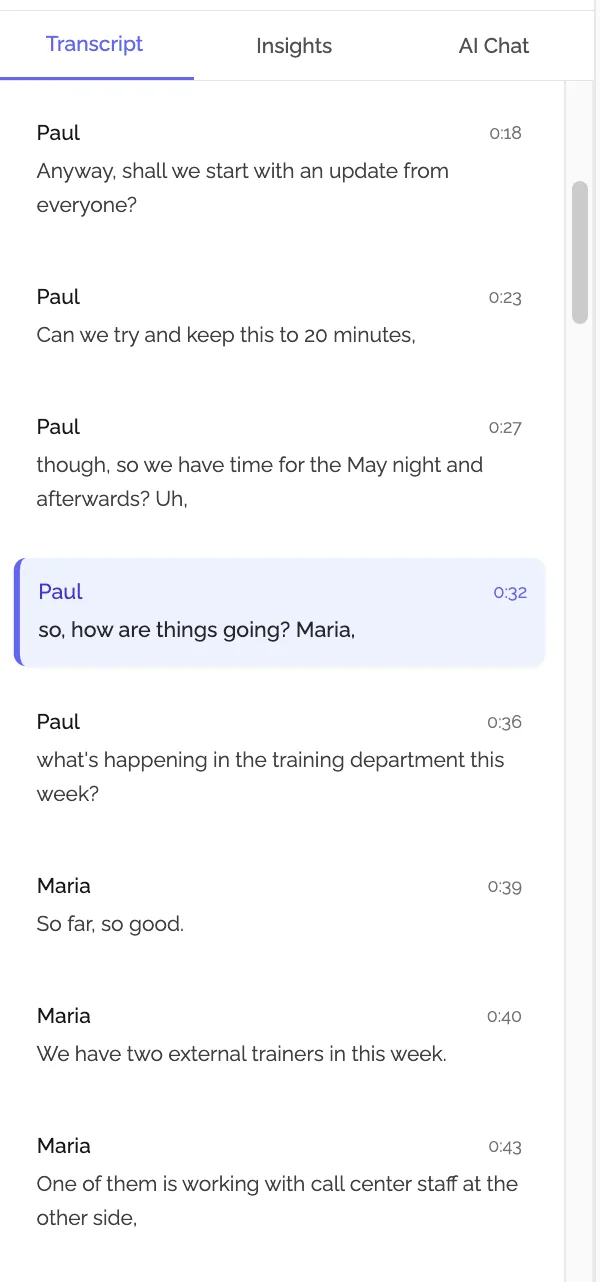
What you get: Full transcript with speaker identification, AI-generated session summary, and key takeaways. The output is a strong starting point for SOAP or DAP note drafting.
BAA availability: Contact KenzNote directly to confirm BAA terms before using with client PHI. Verify current compliance status on their official privacy documentation.
Best for: Therapists in private practice who want a low-cost, privacy-forward option; clinicians who record only selective sessions; practices where upload-based workflow fits the clinical schedule.
Limitation: KenzNote is not purpose-built for mental health. Output formats are not pre-structured as SOAP or DAP notes. Clinicians will use the transcript and summary as raw material to complete structured notes in their EHR.
2. Upheal - Best Purpose-Built Mental Health AI
Upheal is designed specifically for mental health professionals. It joins telehealth sessions (with client consent), generates AI-structured progress notes in SOAP and DAP formats, and produces clinical insights such as session themes, client-reported symptoms, and suggested ICD-10 codes.
Compliance: Upheal offers HIPAA compliance and BAA agreements. They do not use client session data for AI training.
Pricing: Plans start at approximately $69/month for solo practitioners. Practice plans available for group practices.
What you get: Session transcript, structured clinical notes in SOAP/DAP format, session themes, suggested diagnoses, treatment plan tracking.
Best for: Full-time therapists who see 20+ clients per week and want deeply structured clinical output. The monthly subscription cost justifies itself at volume.
Limitation: Higher cost for part-time practitioners. Bot-based session joining requires careful client consent management.
3. Noteable - Best for Group Practices
Noteable provides AI session notes designed for behavioral health practices. It integrates with major EHR systems including SimplePractice and TherapyNotes, allowing AI-generated notes to flow directly into the clinical record.
Compliance: HIPAA-compliant with BAA. Designed specifically for behavioral health settings.
Pricing: Tiered by practice size. Solo plans start around $49/month; group practice plans scale with seat count.
What you get: AI progress notes in standard clinical formats, EHR integration, group supervision note support, treatment plan assistance.
Best for: Group practices that want AI notes to integrate with existing EHR workflows rather than creating a parallel documentation system.
Limitation: Integration quality depends on which EHR you use. Verify compatibility before committing.
4. Blueprint AI - Best for Structured Treatment Documentation
Blueprint AI focuses on the full treatment documentation lifecycle: not just session notes, but intake assessments, treatment plans, progress notes, and discharge summaries. It uses AI to generate and maintain consistent documentation across the treatment episode.
Compliance: HIPAA-compliant with BAA. Designed for outpatient and community mental health settings.
Pricing: Practice-based pricing; contact Blueprint for current rates.
What you get: AI-assisted session notes, intake documentation, treatment plan generation, measurement-based care (MBC) tools, outcome tracking.
Best for: Practices that want AI to support the full documentation lifecycle, especially those using measurement-based care protocols.
Limitation: More complex to implement than a simple note-taking tool. Better suited to practices with established clinical workflows than solo private practitioners.
5. Mentalyc - Best for Solo Private Practice
Mentalyc positions itself specifically for private practice therapists who want to reduce documentation time without enterprise complexity. It processes session audio (telehealth or in-person recordings) and produces AI draft notes in the clinician's chosen format.
Compliance: HIPAA-compliant with BAA. Client data is not used for AI training.
Pricing: Plans start around $29-39/month for solo practitioners, with higher volume options.
What you get: AI draft notes in SOAP, DAP, PIRP, and other formats; customizable note templates; in-person session support via audio upload.
Best for: Solo practitioners who want affordable, purpose-built mental health AI without enterprise-scale features.
Limitation: Newer product compared to Upheal; feature depth and EHR integrations are still expanding.
6. AutoNotes - Best for Quick Drafting Without Recording
AutoNotes is a lightweight AI note-drafting tool that lets therapists describe what happened in a session (via voice or text), and the AI structures the output into a clinical note format. It does not require session recording; instead, it works from clinician-provided summaries.
Compliance: HIPAA-compliant with BAA.
Pricing: Starts at approximately $17/month.
What you get: Quick AI note drafts from clinician voice memos or typed descriptions, multiple note format templates.
Best for: Therapists who prefer not to record sessions at all but want AI assistance structuring their own observations into proper note format.
Limitation: Output quality depends entirely on the clinician's input. No session recording means no transcript. It is an AI drafting assistant, not a transcription tool.
7. Transgate - Best for High-Accuracy Multi-Format Transcription
Transgate is a professional AI-powered transcription platform built for serious accuracy and flexibility. Where many tools focus on a single workflow, Transgate supports the full range of input methods: file upload (20+ audio and video formats), YouTube video transcription and analysis, and even live browser tab audio capture. For therapists who work with diverse client populations or multilingual sessions, Transgate's support for 50+ languages and consistently high accuracy (targeting >95%) stands out.
The YouTube analysis feature is particularly useful for supervisors and clinical educators: paste any YouTube URL to transcribe and analyze training videos, recorded webinars, or continuing education content instantly, with no file upload required.
Why it works for therapy: Transgate's upload-based file processing means you stay fully in control of what gets submitted for transcription. You record your telehealth or in-person session using your existing setup, upload the file, and receive a complete, accurate transcript with AI-generated summary and key highlights. The platform is built with HIPAA and GDPR compliance as core requirements, not afterthoughts.
What you get:
- Full verbatim transcript with speaker identification (diarization)
- AI-generated summary and key highlights extraction
- Interactive chat with the transcript content
- Multi-format export: TXT, DOC, DOCX, CSV
- Developer API for practices that want to integrate transcription into existing workflows
- Audit logging and data encryption at rest and in transit
Accuracy: Transgate uses Soniox as its primary speech recognition engine (with Deepgram as backup for longer files), delivering superior accuracy particularly for non-English languages. For therapists seeing multilingual clients or conducting sessions in languages other than English, this is a meaningful advantage over tools optimized only for English.
Compliance: HIPAA and GDPR compliance features are built into the platform architecture, including audit logging, data encryption, user consent management, and data retention controls. Verify BAA availability and current compliance documentation directly with Transgate before processing client PHI.
Pricing: Subscription plans available; verify current pricing directly with Transgate.
Best for: Therapists working with multilingual or diverse client populations; practices that need high accuracy and robust export options; clinicians who want a developer API for EHR integration; practices handling video files alongside audio.
Limitation: Like KenzNote, Transgate is not purpose-built for mental health documentation. Transcripts and summaries provide excellent raw material but are not pre-structured as SOAP or DAP notes. Clinicians complete their formal notes using the AI output as a foundation.
HIPAA-Compliant AI Note Takers: Comparison Table
| Tool | HIPAA / BAA | Session Recording | Note Format | Pricing | Best For |
|---|---|---|---|---|---|
| KenzNote | BAA available (verify) | Upload-based | AI summary (clinician formats note) | $0.99/session | Privacy-first, selective recording |
| Upheal | Yes | Bot joins telehealth | SOAP / DAP structured | From ~$69/mo | Full-time therapists, high volume |
| Noteable | Yes | Bot joins telehealth | Clinical formats + EHR integration | From ~$49/mo | Group practices |
| Blueprint AI | Yes | Bot joins telehealth | Full treatment lifecycle | Custom pricing | Structured treatment docs |
| Mentalyc | Yes | Upload or bot | SOAP, DAP, PIRP | From ~$29/mo | Solo private practice |
| AutoNotes | Yes | No recording | Multiple clinical formats | From ~$17/mo | Clinician-described drafting |
| Transgate | Yes (verify BAA) | Upload, URL, or live capture | AI summary + highlights (clinician formats note) | Subscription; verify with Transgate | Multilingual sessions, high accuracy, export flexibility |
Pricing is approximate and subject to change. Verify current pricing and BAA terms directly with each vendor.
How Therapists Are Using AI Note Tools
Fact Box: AI Documentation Time Savings
- Session notes: Time reduced from ~20 minutes to 5-8 minutes per note with AI assist
- 10+ hours recovered per week for a therapist seeing 50 clients
- Insurance documentation: AI-structured notes have higher payer audit pass rates due to consistent formatting
- Supervision notes: AI transcripts help supervisees track feedback and demonstrate reflective practice for licensure
- Recall accuracy: 63% of clinicians report forgetting specific client statements within 4 hours without notes
Sources: Mental Health Technology Review 2025, APA Workforce Data
Session Documentation
The primary use case is reducing the time between session end and completed note. With an AI transcript or draft, a therapist who previously spent 20 minutes writing a session note may spend 5-8 minutes reviewing, editing, and signing. At 50 sessions per week, that is 10+ hours recovered.
Clinicians report that AI draft notes are most useful as a structural scaffold, ensuring all required elements of a SOAP or DAP note are present, rather than as a final document. Most practicing therapists still edit substantially, adding clinical interpretation and nuance that AI cannot supply.
Clinical Supervision
Supervision requires detailed discussion of session content. Transcripts of supervision sessions (not client sessions) can help supervisees track feedback, review supervisor recommendations, and demonstrate reflective practice for licensure documentation. Because supervision sessions do not contain client PHI in the same way therapy sessions do, the compliance considerations are somewhat different, though supervisors should still use appropriate confidentiality practices.
Case Consultations
Peer consultation is a cornerstone of ethical practice, particularly for complex cases. AI-assisted notes from case consultation meetings can help clinicians document that consultation occurred, what was discussed, and what clinical recommendations emerged, which is important for risk management purposes. Care should be taken to avoid including identifying client information in any consultation recording.
Insurance Documentation
Payer audits increasingly focus on documentation completeness. AI-generated notes that explicitly address medical necessity, treatment goals, and session content aligned with the treatment plan reduce audit risk. Several clinicians report that AI-structured notes are more likely to satisfy payer requirements precisely because they follow a consistent, complete format.
An Important Warning: AI Should Assist, Not Replace Clinical Documentation
AI note-taking tools are productivity aids. They are not clinicians, and the notes they produce are not clinical records until a licensed professional reviews, edits, and signs them.
Several principles apply regardless of which tool you use:
You remain legally and ethically responsible for every note in your client's record. An AI error in a clinical note (a misheard symptom, a misattributed statement, an incorrect diagnosis inference) is your error if you signed the note. Review every AI-generated draft with the same rigor you would apply to a note written by a student intern.
AI cannot provide clinical interpretation. It can transcribe that a client said "I have been having dark thoughts." It cannot assess suicide risk, evaluate the clinical significance of that statement in context, or determine what documentation is clinically appropriate. That judgment is yours.
Client consent for AI recording is required. Using AI to record and process therapy sessions is a material change to how clinical information is handled. Clients must be informed and must consent. Update your informed consent forms and explain the process (including where data is stored and how it is protected) in plain language.
Do not let AI notes reduce clinical attention. Some clinicians report a subtle risk: knowing a transcript will be available may reduce active listening during sessions. The transcript captures words; it does not capture the therapeutic relationship. Session presence cannot be outsourced.
Frequently Asked Questions
Is AI transcription HIPAA compliant?
AI transcription can be HIPAA compliant if the vendor has signed a Business Associate Agreement (BAA) with you and meets HIPAA's technical and administrative safeguards. The transcription technology itself is not inherently compliant or non-compliant; compliance is a function of the vendor's security practices, contractual commitments, and your own implementation. Before using any AI transcription tool with therapy sessions, confirm in writing that a BAA is in place. General-purpose tools like standard ChatGPT, Google Docs voice typing, or consumer-grade transcription apps do not offer BAAs and cannot be used with PHI.
Can I record therapy sessions?
Legally, the answer depends on your jurisdiction, your professional licensing board's rules, and your client's informed consent. Most states require client consent before recording a therapy session, either all-party consent (every person on the call must consent) or one-party consent (the therapist's consent is sufficient). Even in one-party consent states, professional ethics codes from organizations like the American Psychological Association (APA) and the American Counseling Association (ACA) generally require client notification and consent for recording. Check your state law and your licensing board's specific rules before recording any session.
What is a BAA and why does it matter?
A Business Associate Agreement (BAA) is a legally binding contract between a healthcare provider (or covered entity) and a vendor that handles Protected Health Information (PHI) on their behalf. Under HIPAA, any vendor who stores, processes, or transmits PHI must sign a BAA committing to protect that information to HIPAA standards. Without a signed BAA, sharing PHI with a vendor (including uploading session recordings for transcription) is a HIPAA violation. The BAA also specifies breach notification obligations, acceptable data uses, and what happens to PHI when the business relationship ends.
Can I use ChatGPT to write therapy notes?
Not safely with identifiable client information. As of 2026, OpenAI's standard ChatGPT and API services do not offer HIPAA Business Associate Agreements for general consumer use. Sharing session transcripts or identifying client details with ChatGPT would constitute a HIPAA violation. If you use AI to draft notes, use a service that has signed a BAA with you and do not include identifying client information in prompts to any tool without verifying its HIPAA status.
What should I tell clients about AI note-taking?
Your informed consent documentation should clearly explain: (1) that AI tools are used in your practice documentation process, (2) what data is captured (audio recording, transcript), (3) where that data is stored and who can access it, (4) how long data is retained, (5) that the AI-generated content is reviewed and finalized by you as the licensed clinician, and (6) that clients have the right to opt out of AI recording. Explain this in plain, accessible language. Clients who understand and consent to the process are less likely to experience it as a violation of trust.
How accurate is AI transcription for therapy terminology?
Accuracy varies by tool and audio conditions. Purpose-built mental health AI tools (Upheal, Mentalyc) are trained on clinical language and handle therapeutic terminology, DSM-5 diagnoses, and treatment modality names with reasonable accuracy. General-purpose transcription tools perform less reliably on specialized clinical language. In all cases, transcription errors occur, particularly with proper nouns, accents, simultaneous speech, or poor audio quality. Clinicians must review transcripts carefully before incorporating them into clinical records.
Do I need to store client session recordings permanently?
HIPAA requires covered entities to retain the documentation needed to demonstrate compliance and meet state law medical record retention requirements. For therapy, most states require retaining the clinical record (notes, assessments, treatment plans) for a defined period, commonly 7 years from last service. Many clinicians choose not to retain the raw recording once the note is finalized, both to minimize data exposure and because the note itself is the legal record. Consult with a healthcare attorney or compliance professional about your specific record retention obligations.
Is using an AI note taker something I need to disclose to my licensing board?
Licensing board rules on AI disclosure are evolving rapidly and vary by state. Several states have issued guidance that using AI in clinical practice, particularly in documentation, may require disclosure in certain contexts. Check with your specific licensing board for current guidance. Your professional liability (malpractice) insurance carrier should also be informed, as some carriers are beginning to ask about AI use in clinical practice during policy renewals.
What is the difference between KenzNote and a therapy-specific tool like Upheal?
KenzNote is a general-purpose AI meeting notes tool that works via audio upload. It produces a full transcript, session summary, and key points. Clinicians use this as raw material to write SOAP or DAP notes in their EHR. Upheal is purpose-built for mental health: it joins telehealth sessions, generates structured SOAP/DAP notes automatically, and produces clinical insights like session themes and suggested ICD-10 codes. KenzNote is better for privacy control and selective recording at $0.99/session; Upheal is better for high-volume practices that want structured clinical output without manual formatting.
Can AI note tools work for in-person therapy sessions?
Yes. Upload-based tools like KenzNote and Mentalyc work with any audio file, including recordings made in person with a device or dedicated recorder. You record the session locally, then upload after. This approach also avoids the need for any third-party software to be active during the session itself, which many therapists prefer for in-person work.
The Right Tool for the Right Practice
AI note-taking for therapists is not one-size-fits-all. A solo therapist seeing 25 clients per week in private practice has different needs than a clinical director of a 15-provider group practice managing payer audits and supervision documentation.
For clinicians who want to start simply and maintain strong privacy controls, KenzNote's upload model offers a no-commitment way to experiment with AI note assistance at $0.99 per session, with no bot in the room and no calendar access required. Record the session on your telehealth platform, upload afterward, and use the transcript and summary as the foundation for your SOAP or DAP note.
For therapists who want purpose-built clinical structure and are seeing enough clients to justify a monthly subscription, Upheal and Mentalyc offer AI outputs already formatted for clinical documentation.
Whatever tool you choose: verify the BAA, obtain client consent, review every AI-generated note before signing it, and remember that the therapeutic relationship (not the technology) is what produces clinical outcomes.
Related Resources
- AI Meeting Notes Complete Guide - How AI note-taking works across industries and use cases
- Bot-Free AI Meeting Recorder - Privacy-first recording options that don't join your calls
- Is It Legal to Record Meetings? - State-by-state guide to recording consent laws
- AI Note Taker for Lawyers - HIPAA-adjacent confidentiality considerations for legal professionals
- Automatic Meeting Notes - How AI transcription and summarization actually works
Ready to try AI-assisted documentation for your practice?
Try KenzNote at $0.99/session with no subscription required. Upload a session recording and see the transcript and summary for yourself before committing to any workflow change.
Questions? Email [email protected] or visit our Help Center.
Last updated: May 2026. HIPAA regulations, vendor compliance offerings, and product features change frequently. Always verify current compliance status directly with vendors and consult appropriate legal and compliance professionals for your specific practice situation.

About Muhammad Abuelenin
Muhammad is the co-founder of KenzNote, passionate about building tools that enhance productivity and collaboration. With expertise in full-stack development and AI-powered solutions, he's dedicated to helping teams work smarter through innovative technology.
Ready to transform your meetings?
KenzNote automatically captures meeting insights, extracts action items, and generates summaries so you can focus on the conversation instead of taking notes.
Try KenzNote Free